2026 Live Auction at Capital One All-Star Village
Tuesday, July 14, 2026 at 11:00am ET
Welcome to the online catalogue for the 2026 Live Auction at Capital One All-Star Village
Online pre-bidding for the Live Auction, Lots 1-349, ends on Monday, July 13th at 10pm ET . Pre-bids/ceiling bids left at huntauctions.com will be executed during the auction on Tuesday, July 14, 2026 at 11:00am ET. After online pre-bidding closes on our website, the auction will move to the live format, with bidding available via telephone, absentee, and online interactively via Invaluable (see below), there will be no in-person bidding. If you wish to phone bid during the Live Auction please call 610-524-0822 or email info@huntauctions.com before May 19th. Please note, you do not have to pre-bid in order to bid during the live auction. Online Only lots 373-end, close on Tuesday, July 14, 2026 at 10 pm ET with bidding continuing for 20 minute intervals. Bidding for lots 568-end is only available online at huntauctions.com
If you have any trouble bidding on auction day, May 19th, please call our office at 610-524-0822 so we can assist you as quickly as possible.
 Live Interactive Online Bidding will be available to all registered Hunt Auctions bidders.
This bidding platform will provide Hunt Auctions bidders the ability to participate with real time interactive online bidding during the live auction. The interactive bidding will be powered by Invaluable and may be accessed via a link that will be available closer to the date of the auction. Bidders must have a valid Hunt Auctions username and current email address to bid interactively online during the auction. Please note, unless you have already received premiere bidding status and plan to bid live online for item(s), $75,000 is the total bidding limit, you will need to be preapproved as such.
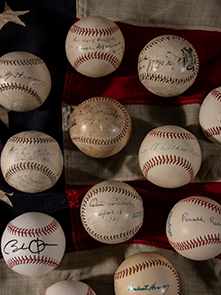
The Commander in Chief Master Set of Twenty-One Presidential Autographed Baseballs (1901-2026)
For more than a century and a half, baseball and the presidency have occupied sacred places in the American imagination. One has been called the national pastime; the other represents the nation's highest office. Together, they have formed a powerful cultural partnership that reflects the hopes, struggles, and traditions of the United States itself. From crowded ballparks and presidential box seats to wartime speeches and ceremonial first pitches, the story of baseball and the presidency is uniquely intertwined with the history of this nation.
The connection between U.S. Presidents and the game of baseball dates back to the nineteenth century when the game was still developing into a national sport. As baseball spread across the country after the Civil War, it became one of the few experiences shared by Americans from different regions, backgrounds, and political beliefs. Presidents quickly recognized baseball's ability to unite citizens in ways that politics often could not.
One of the earliest presidents associated with baseball was Abraham Lincoln. While historians debate some of the stories surrounding Lincoln's attendance at games, there is little doubt that baseball flourished during his presidency. Soldiers played the game in camps throughout the Civil War, helping transform a regional pastime into a truly national sport. By the time the war ended, baseball had become deeply woven into the American identity. Albert G. Spalding aptly noted in his 1911 book titled America's National Game, "Modern baseball had been born in the brain of an American soldier. It received its baptism in the bloody days of our Nation's direst danger. It had its early evolution when soldiers, North and South, were striving to forget their foes by cultivating, through this grand game, fraternal friendship with comrades in arms."
As the twentieth century began, baseball emerged as the nation's dominant sport. United States Presidents increasingly embraced the game, understanding its symbolic importance. Theodore Roosevelt, known for his energetic personality and love of athletics, encouraged physical activity and viewed sports as essential to American character. While Roosevelt was clearly a fan of the more physical game of football, he appreciated baseball's place in American life and recognized its cultural significance.
No tradition better symbolizes the relationship between baseball and the presidency than the ceremonial first pitch. This beloved custom began on April 14, 1910, when President William Howard Taft attended the Washington Senators' Opening Day game against the Philadelphia Athletics. Sitting in the grandstand, Taft threw a baseball onto the field before the game began. Although ceremonial throws had occurred before, Taft's participation established a precedent that would evolve into one of the most enduring rituals in American sports. "The game of baseball is a clean, straight game, and it summons to its presence everybody who enjoys clean, straight athletics. It furnishes amusement to the thousands and thousands." President William Howard Taft.
The image of a president tossing out the first pitch immediately resonated with the public. It represented something uniquely American: the nation's elected leader participating in a game enjoyed by ordinary citizens. The act was simple, informal, and deeply symbolic. For a few moments, political divisions disappeared as fans focused on a shared national tradition.
President Woodrow Wilson was a fervent supporter and fan of the game attending a number of contests during his tenure. Following Taft's example, Wilson threw out Opening Day pitches during his presidency, even doing so while recovering from illness. The tradition became so firmly established that it eventually
came to signify the official beginning of the baseball season.
During the Presidential administrations of Warren G. Harding and Calvin Coolidge, baseball enjoyed tremendous popularity. Harding was an avid fan who attended numerous games and frequently spoke about the sport's importance. His presence at ballparks demonstrated how deeply baseball had become woven into American public life. "I never saw a game without taking sides and never want to see one. There is the soul of the game," remarked Harding.
Coolidge, though more reserved, continued the presidential connection to the game. The relationship between baseball and the presidency took on even greater meaning during the Great Depression and World War II. As Americans faced economic hardship, baseball provided a sense of continuity and hope. President Franklin D. Roosevelt understood this better than anyone. In 1942, after the United States entered World War II, baseball officials wondered whether the sport should suspend operations for the duration of the conflict. Roosevelt's response became one of the most famous documents in baseball history. In what is now known as the "Green Light Letter," sent to Commissioner Kennesaw Mountain Landis, he encouraged Major League Baseball to continue playing. One poignant excerpt from the significant document reads as follows: "I honestly feel that it would be best for the country to keep baseball going. There will be fewer people unemployed and everybody will work longer hours and harder than ever before. And that means that they ought to have a chance for recreation and for taking their minds off their work even more than before."
Roosevelt believed that baseball would boost morale for both civilians and servicemen. Games provided a temporary escape from wartime anxieties and reminded Americans of what they were fighting to preserve. His decision helped ensure that baseball remained a constant presence throughout the war years.
The postwar era brought new opportunities for Presidents and baseball to intersect. President Harry Truman, a lifelong sports enthusiast, frequently attended games and maintained the tradition of presidential involvement. President Dwight D. Eisenhower continued this connection during the prosperous 1950s, a decade often remembered as one of baseball's golden ages. "Ike" was a lifelong baseball enthusiast who notably recalled a childhood dream: "I told him that I wanted to be a real major league baseball player, a genuine professional like Honus Wagner. My friend said that he'd like to be President of the United States. Neither of us got our wish."
Perhaps no president was more publicly associated with baseball than President John F. Kennedy. Young, charismatic, and athletic, Kennedy represented a new generation of leadership. His attendance at Opening Day ceremonies and his interactions with players reinforced baseball's role as a symbol of national unity during a period of social change and Cold War tension. His celebrity meshed well with the immense national popularity of the game's greatest stars and only furthered the overall public stature of both. Kennedy's trademark style and wit were ideally exemplified by a quip about Stan Musial: As television transformed American culture, ceremonial first pitches became increasingly visible. Millions of viewers could now watch presidents participate in baseball traditions. What had once been witnessed by a few thousand fans in a stadium now reached households across the nation.
The tradition continued through the administrations of Lyndon Johnson, Richard Nixon, Gerald Ford, Jimmy Carter, and Ronald Reagan. Each president brought a unique personality to the role, but all understood the significance of baseball's connection to the American people. Reagan, a former radio broadcaster who had once announced baseball games, possessed a particularly deep appreciation for the sport's storytelling traditions. Among Reagan's countless remarks about the game he so loved was this observation: "I wouldn't even complain if a stray ball came through the Oval Office window now and then."
One of the most indelible and memorable moments in the history of baseball and the Presidency occurred on October 30, 2001. Just weeks after the September 11 terrorist attacks, President George W. Bush threw out the ceremonial first pitch before Game 3 of the World Series at Yankee Stadium. Wearing a protective vest beneath his jacket, Bush walked confidently to the mound and delivered a strike to home plate.
The moment transcended sports. In a city still grieving and a nation still recovering from tragedy, the pitch became a symbol of resilience and determination. The crowd's emotional response reflected baseball's enduring ability to bring Americans together during difficult times. Many historians consider it to be the most significant ceremonial first pitch ever thrown.
The modern era of the presidency continued the tradition into the twenty-first century. Barack Obama, Donald Trump, and Joe Biden each maintained connections to baseball in various ways, demonstrating that the sport remains an important part of American civic culture. Although modern presidents face countless responsibilities and a rapidly changing media environment, baseball still offers opportunities to connect with citizens through a shared tradition.
The relationship between baseball and the presidency is ultimately about more than sports or politics. It reflects the ways Americans tell their collective story. Baseball provides a language of hope, perseverance, and renewal. Every season begins with optimism. Every game offers the possibility of redemption. These themes resonate deeply with the American experience and with the responsibilities of presidential leadership. So long as baseball remains part of the nation's cultural fabric, presidents will likely continue to participate in its traditions.
It is a reflection of the American spirit, and its partnership with the presidency remains one of the country's most enduring and heartfelt traditions.
Click here to view a PDF of the Collection.
Click here to view and bid on this Lot
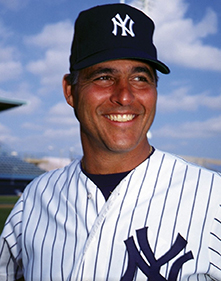
The Personal Collection of Bucky Dent
Lot #s 52-103 originate from the personal collection of Bucky Dent. Dent began his MLB career as a highly touted first round draft pick of the Chicago White Sox. In short order, Bucky rewarded the club with exceptional defensive play at the shortstop position leading the AL in fielding percentage for a shortstop in just his third season earning his first of three All-Star team selections. Dent's steady play drew the interest of the league to which he was traded to the New York Yankees in advance of the 1977 season to bolster the team's roster in pursuit of their first championship since 1963. During his first season with the Yankees in 1977 the club won the World Series and repeated again in 1978 with Bucky providing a needed anchor to the team's interior defense. It was during the Yankees' 1978 AL East stretch run that Bucky Dent belted an unlikely home run to defeat the rival Boston Red Sox in the AL East tie-breaking game to which would forever be anointed by the Boston faithful as "Bucky F….ing Dent". Dent continued his amazing play during the 1978 postseason to capture World Series MVP honors behind a .417 batting average with seven RBI's. Bucky's MLB tenure endured after his playing career ended as a well regarded manager and coach with the Yankees, Reds, Cardinals, and Rangers. Bucky Dent remains one of the more popular and beloved players of the 1970s era with his iconic home run seared within the history of MLB among the more legendary of the 20th century. The offered items are being presented to the collecting public for the first time with the wish of Mr. Dent that they be enjoyed just as he enjoyed and appreciated his many fans throughout his career.
Additional lots from the Bucky Dent Collection will be available within the online only portion of this auction as Lots 619-666.
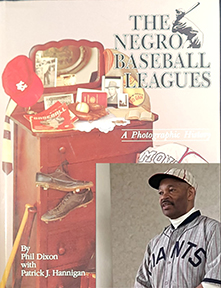
Phil Dixon Collection
Lot #s 181-204 originate from the personal collection of noted Negro League and African American Baseball historian Phil Dixon. For more than 30 years Dixon has interviewed more than 500 former Negro League players and authored numerous highly regarded books on the subject. Phil has long been regarded as a pioneer in the research and history of the Negro Leagues and its players serving on the National Advisory Board for the Negro Leagues Baseball Museum. Beginning in 1977 with just eight photographs, Dixon began collecting artifacts related to the Negro Leagues with heavy focus on their history through a photographic medium. The offered collection represents one of the most significant of its type with the majority of the pieces within being offered for the first time publicly. We are honored to present this important archive of African American related baseball imagery.
Additional lots from the Phil Dixon Collection will be available within the online only portion of this auction as Lots 810-836.
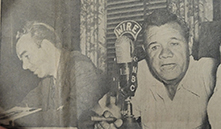
Jim Chapman Collection
Lot #s 144-229 originate from the personal collection of Jim Chapman. Chapman began his career within the sporting industry in 1946 having begun a position with the Ford Motor Company in Detroit He was tasked to publicize Ford's American Legion Junior Baseball League and boldly elected to enlist the greatest name in the history of baseball, Babe Ruth. Ruth had just been diagnosed with throat cancer but nonetheless was happy to take on the role and promote the game of baseball to the youth of America to whom he had always held dear to his heart. Chapman and Ruth became extremely close during their travels throughout the final two years of the Babe's life to the point where Ruth would routinely as Chapman, "Are you feeling ok?" even while he himself was dying of cancer. In one final demonstration of that kinship, shortly before his passing in 1948 Ruth presented Jim Chapman with his cherished good luck coin that he had held since the first game in Yankee Stadium in 1923. Chapman was one of a very small group of family and close friends that were present during Babe's final days at New York's Memorial Hospital. Although Jim Chapman's relationship with Babe Ruth was certainly significant, he would go on to enjoy an equally prestigious career within the Ford Motor Co. and later as the Director of Racing for PPG Industries. Chapman is credited with being one of the most influential people in the history of Indy Car racing having been recognized by Indy Car Racing magazine as the sport's most influential man of the 1980's. The magazine wrote that Chapman turned "a public relations assignment into an art form." The materials within the Chapman Collection are being offered for the first time publicly and are among the finest of their type to have come into the marketplace with unimpeachable direct provenance.
Tuesday, July 14, 2026 at 11:00am ET
Auction Location:
Capital One All-Star Village
Pennsylvania Convention Center 1101 Arch St, Philadelphia, PA 19107
Preview Exhibition & Appraisal Fair:
Capital One All-Star Village
Pennsylvania Convention Center
Saturday, July 11th - Sunday, July 12th 10:00am - 8:00pm
Monday, July 13th - Tuesday, July 14th 10:00am - 6:00pm
Bidding Inquiries:
Hunt Auctions
256 Welsh Pool Road | Exton, PA 19341
Ph: 610.524.0822 | Fax: 610.524.0826
info@huntauctions.com